Your open-top dumpster is full, again. It’s only been a few days since the last haul, your team’s waste volume isn’t any greater than usual, and yet there it is, filled to the top—or at least looking that way.
Before you call the hauler, ask yourself a simple question: Is that dumpster actually full, or is our trash just taking up too much space?
For most businesses, it’s the latter. And understanding why is the first step toward fixing one of the most common and avoidable costs in commercial waste management.
The Real Reason Your Dumpster Looks Full
Think about what actually goes into a commercial dumpster on a typical day. Empty cardboard boxes that are full of air. Wooden pallets and crates piled up at odd angles. Shrink wrap and plastic packaging that billows and bunches. Trash bag after trash bag tossed over the side that settle unevenly.
None of this is relatively heavy, not for a heavy-duty roll-off dumpster. But all of it takes up an enormous amount of room in little time.
The issue isn’t how much waste your business generates; it’s how inefficiently that waste rests in the container. Loose, low-density materials trap air pockets, creating air pockets and dead zones inside the dumpster that make it look full from the outside. Dumpsters that look full are often only holding a fraction of what they’re actually designed to handle.
That’s the physics behind the problem. Now here’s the cost.
What Early Hauls Actually Cost You
Every time a dumpster gets hauled before it’s genuinely full, you pay the full cost of that haul. Hauling costs, fuel surcharges, and other add-on fees usually don’t decrease if the dumpster weighs less. A half-full container costs you just as much as one that’s completely at capacity.
For businesses that haul weekly, or even multiple times per week, those costs compound fast. And because haul schedules are usually based on how full the dumpster looks rather than how full it actually is, it’s easy to fall into a pattern of paying for unnecessary hauls. In fact, a lot of haulers bank on this.
Wondering what’s actually driving those charges? A closer look at your hauling contract can reveal fine print fees and line items that many businesses don’t catch.
Multiply all that across multiple locations or a full calendar year, and the total cost of reactive dumpster hauling becomes significant. Most businesses that take a closer look at their waste spend find they’re paying for more hauls than their actual waste volume requires.
How Mobile Waste Compaction Changes the Math
On-site waste compaction service addresses the root cause directly. Rather than accepting the dumpster as it fills—loose materials, trapped air, and all—mobile waste compaction reduces waste volume inside the container before a haul is ever needed.
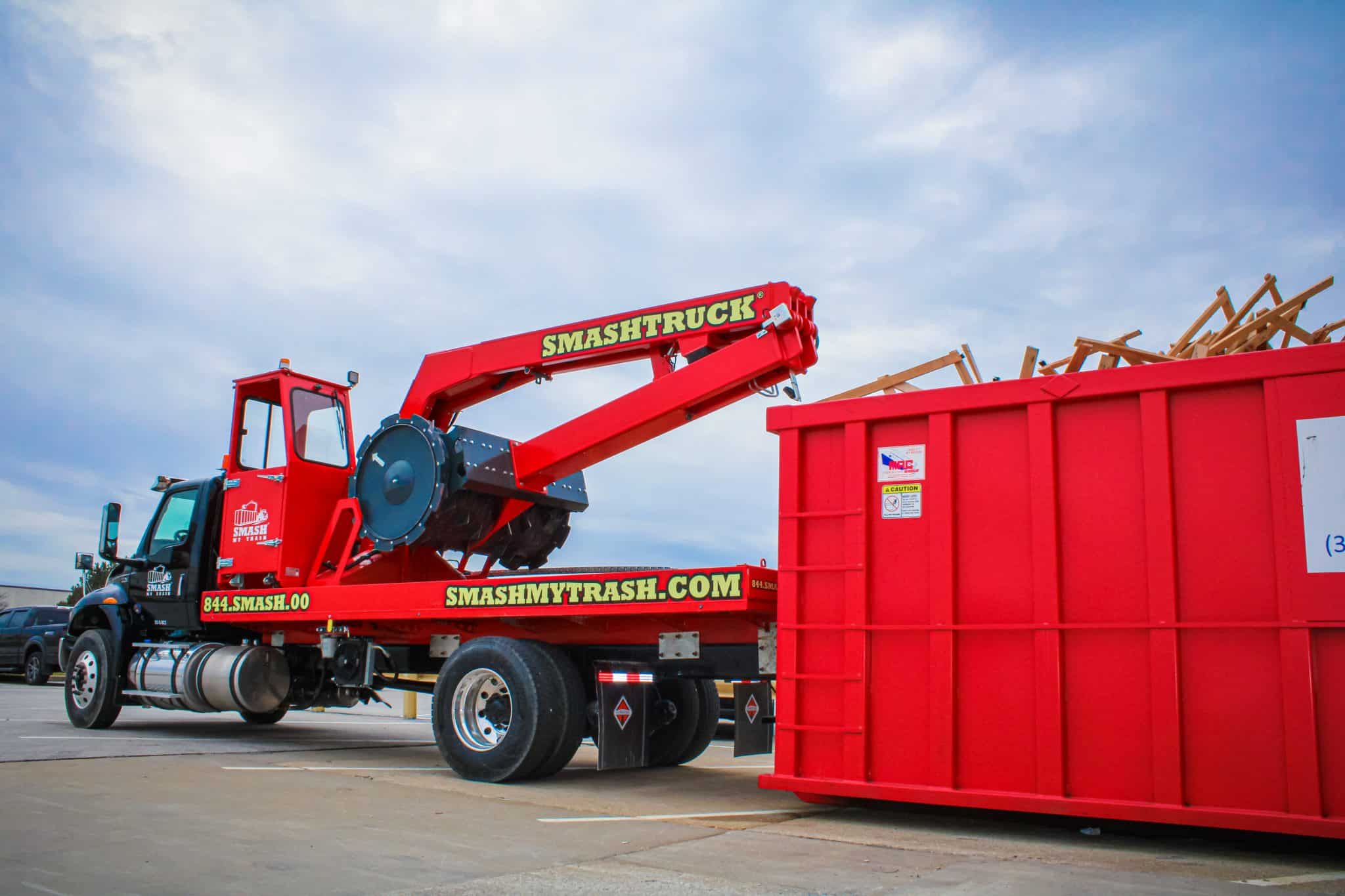
The smarter, proactive solution? A Smash My Trash® Smash Truck® arrives at your location and safely compacts the waste in your open-top, roll-off dumpster. By eliminating air pockets and reducing waste volume up to 70%, the service creates significantly more usable space in your container. Your team keeps filling it. We come back and compact again. The dumpster stays in use far longer than it would without compaction.
When it’s genuinely full, we let you know it’s time to schedule a haul. The process becomes predictable, efficient, and far less expensive.
Not sure if the service is the right fit for your operation? This breakdown can help.
Materials That Fill Dumpsters Fastest
Some types of trash are worse offenders than others when it comes to wasted space. If your dumpster handles any of the following, on-site mobile waste compaction can deliver significant results:
Cardboard
From standard boxes to cartons, corrugated sheets, and more, cardboard is one of the most space-robbing waste streams in distribution, logistics, manufacturing, and retail environments. Thankfully, it’s also one of the easiest items to compact.
Wood and pallets
Wood shipping materials such as pallets and crates are big, bulky, and nearly impossible to efficiently stack inside a roll-off dumpster. They quickly pile up and are difficult to manage without compaction.
Plastic packaging and shrink wrap
Lightweight and airy by nature, plastic packaging material expands and bunches in ways that make it one of the most volume-inefficient waste types per pound.
General mixed waste
Trash bags and mixed commercial waste settle unevenly, creating dead zones throughout the dumpster that add up to significant wasted capacity in little time.
What Mobile Waste Compaction Looks Like in Practice
Businesses that implement a mobile waste compaction service typically see an immediate difference in how often hauls need to happen. Containers that were being pulled weekly start going two or three weeks or even longer between hauls. Dumpsters that always seemed to be overflowing now become manageable. And the waste costs that seemed constant finally start to come down.
Smash My Trash customers across manufacturing, distribution, transportation, and logistics, and other high-volume industries typically save around 15–20% on total waste costs. Those savings come directly from eliminating unnecessary hauls that happened too often before the dumpster was genuinely full.
Our mobile service requires no new equipment, no construction, no permits, and no changes to how your team manages your waste day-to-day. Smash My Trash is designed to integrate seamlessly and work alongside your existing dumpsters and hauler. What’s more, we flex with you as your waste needs change.
Is Your Dumpster Really Full?
By now, we hope the next time your dumpster looks full, you ask yourself: Have I called Smash My Trash yet?
If you’re hauling cardboard, pallets, packaging waste, or any general commercial waste, a mobile dumpster compaction service is one of the most straightforward ways to reduce your hauling frequency — and how much it ends up costing.
Ready to Get More Out of Every Dumpster?
Smash My Trash eliminates unnecessary hauls for commercial businesses across the country, so they can lower total waste costs and get significantly more use out of every open-top, roll-off dumpster. No equipment to install, no operational disruption, and measurable results starting from the first visit.