Many companies think they have a pretty good handle on their commercial waste costs. You get a bill from your hauler, you pay for your dumpster service, and life moves on. Simple, right?
Not quite.
If you’ve ever looked closely at your waste invoice, you may have noticed a whole menu of additional fees: environmental charges, contamination fees, recovery fees, fuel surcharges, admin costs, overweight penalties; the list goes on.
Some are legitimate. Some are debatable. And some quietly grow over time without anyone noticing.
So let’s pull back the curtain on what you’re actually paying for, and how a simple service like mobile waste compaction from Smash My Trash® can help cut down your total spend without overhauling your entire operation.
The Myth of “One Simple Hauling Charge”
At first glance, commercial waste removal seems straightforward:
Your open-top dumpster gets hauled → you get charged → done.
But the truth is, many companies pay for far more than just the pickup. Here are some of the most common fees hiding in plain sight on commercial waste invoices:
1. Fuel Surcharges
When fuel prices go up, so does your bill.
When fuel prices go down, your bill doesn’t always follow.
These surcharges can fluctuate monthly and account for a significant portion of your total cost, especially if you’re scheduling hauls more often than you really need.
2. Environmental Fees
These aren’t always standardized, and they vary widely by hauler and location. In many cases, they’re calculated as a percentage of the total invoice, not a flat fee.
That means:
More hauls → higher fees
Higher fees → bigger percentage totals
The added costs stack fast.
3. Tonnage Charges
If your dumpster is hauled and weighed at the landfill or transfer station, you’re paying per ton. And depending on the materials you handle—wood, pallets, cardboard, manufacturing waste—your loads may be heavier than you realize.
4. Contamination or “Overage” Fees
Simply filling your dumpster can trigger surprise charges:
- Debris spilling over the rim
- Loose materials blowing away during transport
- Waste packed too high or at unsafe angles
Even a single flagged pickup can increase your costs for months.
5. Minimum Rates and Dry Runs
Conversely, you might face additional charges for dumpsters that aren’t full enough! Many haulers set minimum tonnage fees, meaning they get paid even if they haul away your dumpster before you have a chance to fill it.
And if, for whatever reason, they can’t haul away the container, you may be hit with the trip fee known as a “dry run.”
6. Admin, Recovery, and Miscellaneous Fees
Every hauler uses different wording, but these add-ons typically cover:
- Processing
- Disposal
- Regulatory costs
- Fuel risk
- Landfill surcharges
- Permit recovery
Individually, they might not seem like much, especially from one month to the next. Combined? They quietly push your waste bill far above what you originally budgeted.
Let’s Do Some Real Math
Imagine your business pays:
- $450 per haul
- Six hauls per month
What you think you’re paying:
$2,700/month
What you’re actually paying:
Closer to $3,100–$3,400/month, depending on the surcharge structure. Most companies are looking at 12-22% over their base monthly rate when you factor in extra charges like:
- Overages
- Heavy loads
- Contamination fees
- Seasonal rate changes
- Emergency hauls
If your waste stream fluctuates, or if your dumpsters fill up unevenly, you may be paying for hauls you didn’t really need.
This is why understanding your true cost is the first step toward taking control of it.
What’s Driving All These Extra Waste Fees?
Waste hauling is a complex business. Trucks, fuel, labor, equipment, landfill fees, DOT regulations, insurance—they all add up.
But here’s the part nobody talks about:
Haulers make money by hauling. Not by optimizing your costs.
So if your dumpster looks full (even if it’s not), they’ll haul it and charge you accordingly. That’s the business model.
Open-top dumpsters are often filled with pockets of air created by:
- Wood
- Pallets
- Packaging
- Crates
- Boxes
- Loose, bulky waste
Those air pockets? You’re paying to haul them before the dumpster is actually full. This is where mobile waste compaction changes the game.
A Smarter Way to Cut Waste Costs (Without Switching Haulers)
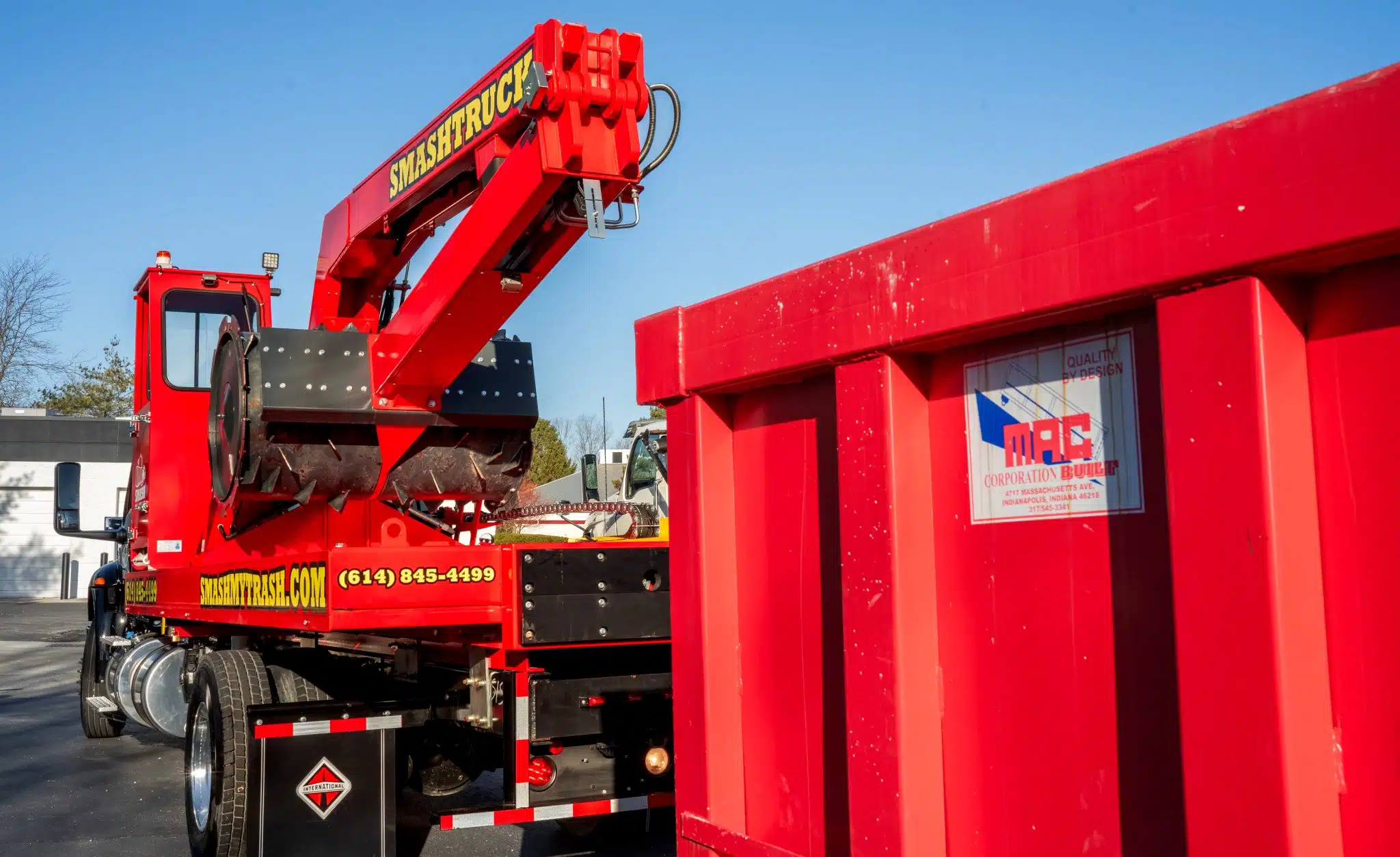
Mobile waste compaction from Smash My Trash reduces waste volume in your open-top dumpsters by up to 70%. This simple solution has a ripple effect across your entire waste bill.
Here’s how it works:
Fewer Hauls = Fewer Fees
If you can turn six hauls a month into three, you instantly reduce excess:
- Fuel surcharges
- Environmental fees
- Tonnage costs
- Admin and recovery fees
- Contamination or overage charges
Lower Total Monthly Spend
Customers typically see 15–20% savings after adding mobile waste compaction, even without changing their hauler or their daily operations.
Why? Because the fastest way to reduce total cost is to simply reduce the number of times you haul.
More Predictability and Control
With Smash My Trash, our team monitors your waste patterns, keeps your dumpsters properly compacted, and tells you when it’s the right time for a haul–not too early, not too late.
That means:
- No surprise overflows
- No last-minute emergencies
- No wasted hauls
- No unnecessary fees
Just smart, simple, optimized waste operations.
A Cleaner, Safer Facility
Mobile compaction also reduces:
- Waste volume
- Overflows
- Windblown debris
- Cluttered loading zones
- Safety-related hazards
This supports both productivity and safety goals.
Support for Sustainability and ESG Reporting
Fewer hauls = fewer carbon-emitting truck trips.
Many businesses now include Smash My Trash in their ESG and sustainability reporting as a Scope 3 emissions reducer that is easy to implement and achieve.
The Bottom Line: You’re Paying Your Hauler for More Than You Realize, But You Don’t Have To
Waste costs often climb higher than your expected haul costs when you add in:
- Fuel surcharges
- Environmental fees
- Tonnage rates
- Overage penalties
- Administrative add-ons
- Surprise charges
- Operational disruptions
Mobile waste compaction cuts through the confusing clutter by reducing the one factor that drives nearly every cost on your invoice: the number of hauls.
Ready to Reduce Your Waste Costs?
Learn how mobile waste compaction works and see firsthand how much you could save, with a free, no-obligation on-site demo smash.