Sustainability has moved far beyond buzzwords and good intentions. Today, companies are expected to show measurable progress toward reducing environmental impact, especially when it comes to waste management.
One strategy gaining traction across industries is waste-to-energy (WTE). By diverting non-recyclable waste from landfills and converting it into usable energy, businesses can reduce landfill reliance while supporting broader sustainability goals.
So where does mobile waste compaction fit into waste-to-energy efforts?
At Smash My Trash®, our role is simple but powerful: we help businesses manage waste more efficiently, reduce unnecessary hauling, and create cleaner, more organized waste streams that support smarter disposal and diversion strategies.
Let’s break it down.
What Is Waste to Energy?
Waste to energy is the process of converting non-recyclable waste materials into usable energy, such as electricity, heat, or fuel, through controlled processing methods. Instead of sending everything to landfills, certain materials are redirected to facilities designed to recover value from waste.
For businesses, waste-to-energy can:
- Reduce landfill dependence
- Support sustainability and ESG initiatives
- Improve overall waste stream efficiency
But like any sustainability strategy, success depends on how waste is handled before it ever leaves your site.
The Link Between Waste Operations and Sustainability
Waste-to-energy doesn’t begin at the processing facility; it starts at your dumpster.
Poorly managed waste operations create challenges that limit diversion opportunities:
- Overflowing dumpsters
- Loose, bulky materials taking up space
- Frequent, unnecessary hauls
These inefficiencies make it harder for waste to be properly sorted, routed, and managed downstream (not to mention they all increase waste costs).
That’s where mobile waste compaction supports the bigger picture.
How Smash My Trash Supports Waste-to-Energy Efforts
Smash My Trash doesn’t convert waste into energy. What we do is help businesses optimize their waste operations so sustainability strategies like waste-to-energy can actually work.
Here’s how.
Fewer Hauls, Lower Emissions
Mobile compaction means fewer hauls. Every haul eliminated means one less truck on the road.
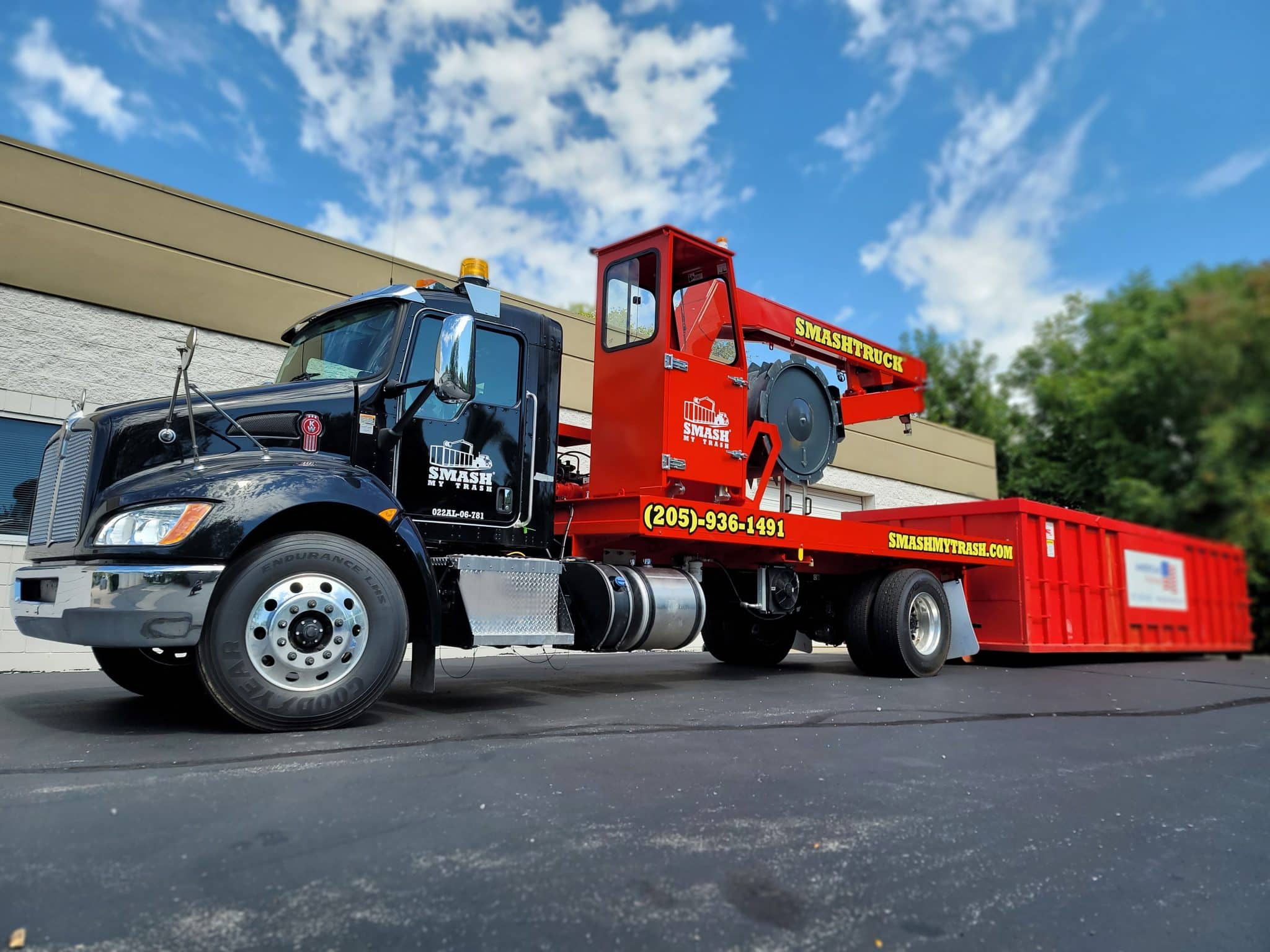
By compacting waste inside open-top, roll-off dumpsters, Smash My Trash reduces waste volume by up to 70%. This allows businesses to significantly reduce hauling frequency, which directly lowers:
- Fuel consumption
- Facility and job site congestion
- Scope 3 greenhouse gas emissions
For companies tracking sustainability metrics, reducing unnecessary hauls is one of the most immediate, measurable wins available.
Cleaner, More Organized Waste Streams
Waste-to-energy relies on consistent, manageable waste streams. When waste piles up in dumpsters or spills into the surrounding area, materials are more likely to be contaminated or mishandled.
Mobile waste compaction:
- Keeps waste contained inside the dumpster
- Reduces loose debris and overflow
- Maintains cleaner waste zones
- Supports better separation practices
When commercial waste is managed efficiently on-site, it’s easier for downstream partners to route materials appropriately, including toward waste-to-energy facilities when applicable.
Improved Landfill Diversion Opportunities
While mobile waste compaction doesn’t change the amount of waste generated, it does improve how that waste is handled.
By increasing usable space in open-top dumpsters and reducing the frequency of hauls, businesses gain:
- More use-time for each dumpster
- Fewer rushed hauls
- Better alignment with diversion programs
This operational consistency supports landfill diversion efforts by keeping waste streams predictable and easier to manage.
5 Steps to Smarter Waste Stream Separation
If waste-to-energy is part of your sustainability roadmap, effective waste stream separation is essential. Here are five practical steps businesses can take, and how mobile waste compaction fits in.
Step 1: Understand Your Waste Profile
Start by identifying what types of waste your operation generates:
- Cardboard and packaging
- Wood and pallets
- Mixed commercial waste
- Non-recyclable materials
Knowing what’s in your waste stream helps determine what can be recycled, diverted, or routed to waste-to-energy facilities.
Step 2: Separate Where It Makes Sense
Clear separation at the source improves downstream outcomes. That might include:
- Dedicated dumpsters for recyclable materials
- Separate containers for mixed or single-stream waste
- Defined waste zones across your facility
Cleaner separation reduces contamination and supports more effective diversion.
Step 3: Keep Dumpsters Usable and Accessible
Overflow is the enemy of sustainability.
When dumpsters fill too quickly, employees improvise, often mixing waste or piling it outside the container. Mobile waste compaction reduces waste volume to help keep dumpsters usable longer, reducing the pressure that leads to poor separation habits.
Step 4: Reduce Unnecessary Hauls
Frequent hauling doesn’t just increase costs; it disrupts waste stream consistency.
By compacting waste on-site, businesses reduce hauling frequency, save on waste costs, and create a more predictable waste flow. This stability supports better routing decisions and diversion planning.
Step 5: Track, Adjust, and Improve
Sustainability strategies work best when they’re flexible. Monitoring waste patterns allows businesses to:
- Adjust compaction schedules
- Improve separation practices
- Identify new diversion opportunities
Mobile waste compaction provides a strong operational foundation for continuous improvement.
A Practical Approach to Sustainability
Sustainability doesn’t have to be complicated. Waste-to-energy is one piece of a broader environmental strategy, and it works best when supported by efficient waste operations.
Smash My Trash helps businesses take practical, measurable steps toward sustainability by:
- Reducing unnecessary hauling
- Lowering transportation-related emissions
- Supporting cleaner, more manageable waste streams
- Improving overall commercial waste management efficiency
By focusing on how waste is handled before it leaves your site, mobile waste compaction supports smarter diversion strategies and a more sustainable future.
Ready to Put Your Sustainability Strategy Into Action?
Smash My Trash helps businesses reduce unnecessary hauls and associated costs, lower Scope 3 emissions, and streamline waste operations with proven mobile waste compaction.