When was the last time your team reviewed your dumpster hauling schedule? Chances are it was set up once, and rarely – or never revisited. The plan probably made sense at the time. Trash volume may not have been fully understood; the hauler suggested a pickup cadence, and everyone got back to work. It’s a common process for companies of all shapes and sizes.
The catch is that while a hauling schedule may stay fixed, your business doesn’t. Demand grows, waste volume shifts, costs climb, and the dumpster keeps getting pulled on the same cycle whether it needs to be or not. The result? A waste bill that seems higher than it should, month after month.
Here are four signs your schedule is working against your waste budget, and how running some simple numbers can help your bottom line.
1. Your Dumpster Gets Hauled Before It’s Full
Walk out to your dumpster right before your next scheduled haul. If there’s visible room left inside, you’re paying full price for a container that isn’t actually full. It’s the most common sign and the easiest one to check.
Of course, the eye test only catches part of it. Cardboard, crates, pallets, and packaging trap lots of air, so even a dumpster that looks full is often hiding – and hauling away – a lot of empty space. Too often, hauls end up scheduled around appearance instead of capacity. We break down why that happens here.
Run the numbers: Pull your last three months of hauling invoices and count the hauls. Then estimate how many dumpsters were pulled with room to spare. Every one was money spent moving empty space, and that’s before considering all the air trapped in the dumpsters that looked full.
2. Overflow Occurs Between Hauls
If your team is regularly cleaning up trash around the dumpster, physically entering it to break down boxes and move materials to fit more in, or repeatedly calling for unscheduled swaps, your hauling schedule isn’t keeping pace with your needs.
In a way, overflowing dumpsters cost you twice. There’s the labor – not to mention the safety risk – your staff spends trying to manage it, and there’s the unscheduled haul it often triggers, which adds a charge you didn’t plan for.
Run the numbers: Estimate the hours your team spends on dumpster cleanup each week and multiply by an hourly labor rate. Add any unscheduled haul charges from the last quarter.
3. Your Staff Is Making Dump Runs
This one hides well, because it never appears on a hauling invoice. The dumpster’s full, the next haul is days away, but your waste doesn’t stop. And so, someone loads a company vehicle with trash and drives it to the landfill or transfer station.
That trip costs fuel, vehicle wear, disposal fees, and hours pulled away from the job that person was hired to do. New England Spas ran into this exact problem, using delivery vehicles for dump runs before switching to mobile waste compaction. Afterward, they cut hauls by 80% and saved more than $17,000 a year.
Run the numbers: Count the dump runs your team made last month. Multiply by the round-trip time, the labor rate of whoever drove, and fuel.
4. You’re Renting Extra Dumpsters to Keep Up
Adding additional dumpsters as your business output grows is a smart move. But if you’re renting an extra roll-off just to keep up with existing waste volume, there may be a better way.
Before doing so, determine how much capacity in your current dumpster goes unused. Compacting the waste that’s already inside creates up to 70% more usable space, which often means your dumpster can hold enough material between hauls without having to rent another.
Run the numbers: Add up the monthly rental cost of any dumpster brought on to manage overflow. That’s a recurring expense worth testing against compaction first.
Heavyweight Waste offers industry-exclusive dumpsters engineered to hold up to 50% more waste than standard 30- and 40-yard dumpsters. Find a service near you.
What Do All Four Signs Have In Common?
Looking at this list, a pattern shows up. Each sign comes from hauling more often than your waste volume calls for. So ask yourself: is my schedule built around my real volume, or around a calendar someone set years ago?
That’s also what makes this fixable. Most commercial trash solutions focus on moving waste off-site faster. Mobile waste compaction works on the waste itself, before it’s hauled away.
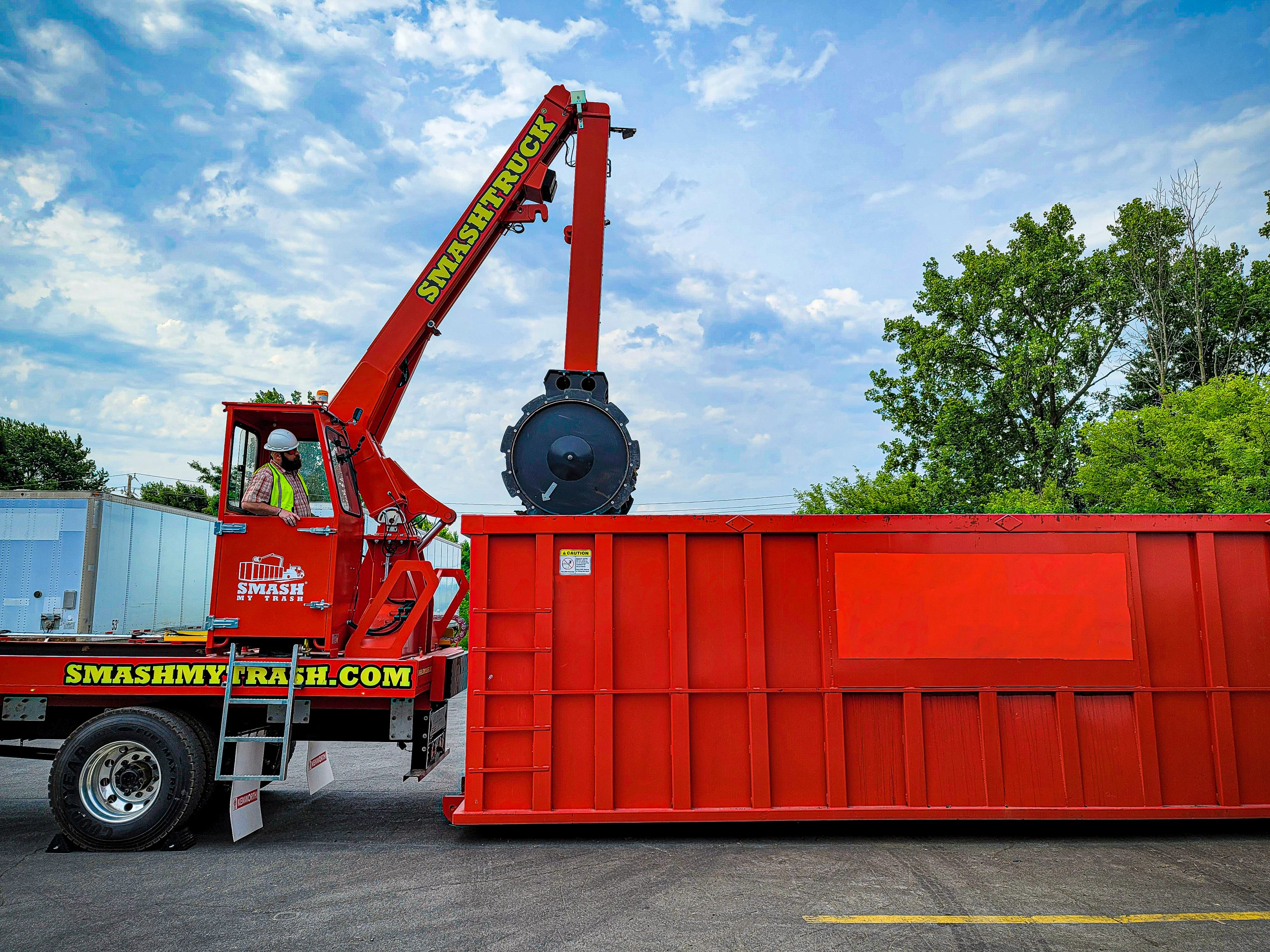
Smash My Trash® visits your site on a schedule tailored to your volume and compacts your waste in existing dumpsters, reducing waste volume by up to 70%. Between smashes, the dumpster now holds far more material. And instead of guessing when it’s actually full, we’ll tell you when it’s time to haul. The result? Fewer hauls, lower costs, and simpler waste management.
Our service fits right into your existing operations, with no new equipment and no disruption to your day. Smash My Trash customers typically see 15–20% in commercial waste cost reduction as hauling frequency comes down.
Questions About Your Commercial Waste Hauling Schedule
How do I know if I’m overpaying for waste hauling?
Start by comparing how often your dumpster gets hauled versus how full it is when it leaves. If it’s regularly picked up with room to spare, or your team spends time trying to make more space or driving to the dump, your hauling schedule has likely drifted out of step with your waste volume. Any of the four signs above is a good place to begin.
Can I reduce hauling costs without switching haulers?
Yes. Smash My Trash compacts your waste inside the dumpsters you already have on site – your hauler simply comes out less often. If your current hauler isn’t a good fit, we work alongside a national network of trusted hauling partners and can connect you with one.
How much can mobile waste compaction cut my waste bill?
Smash My Trash customers save an average of 15–20% on their total waste expenses after paying for the service. For a quick estimate based on your own hauling, try our Savings Calculator.
Ready to Lower Waste Costs At Your Facility?
If any of these signs look familiar, there’s likely money sitting in your hauling schedule. A demo shows you exactly how much space compaction reclaims inside the dumpster you already have. There’s no commitment, and you’ll walk away with a clear picture of what fewer hauls could mean for your budget.